






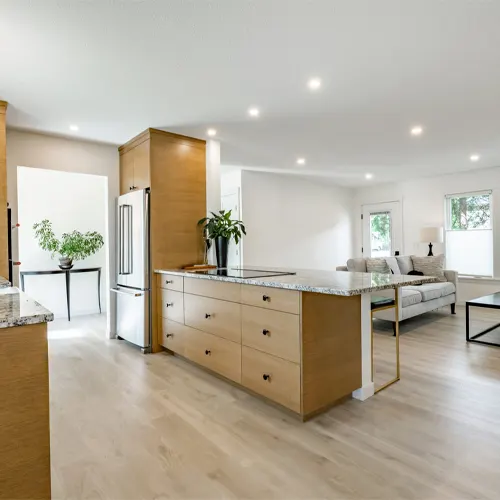


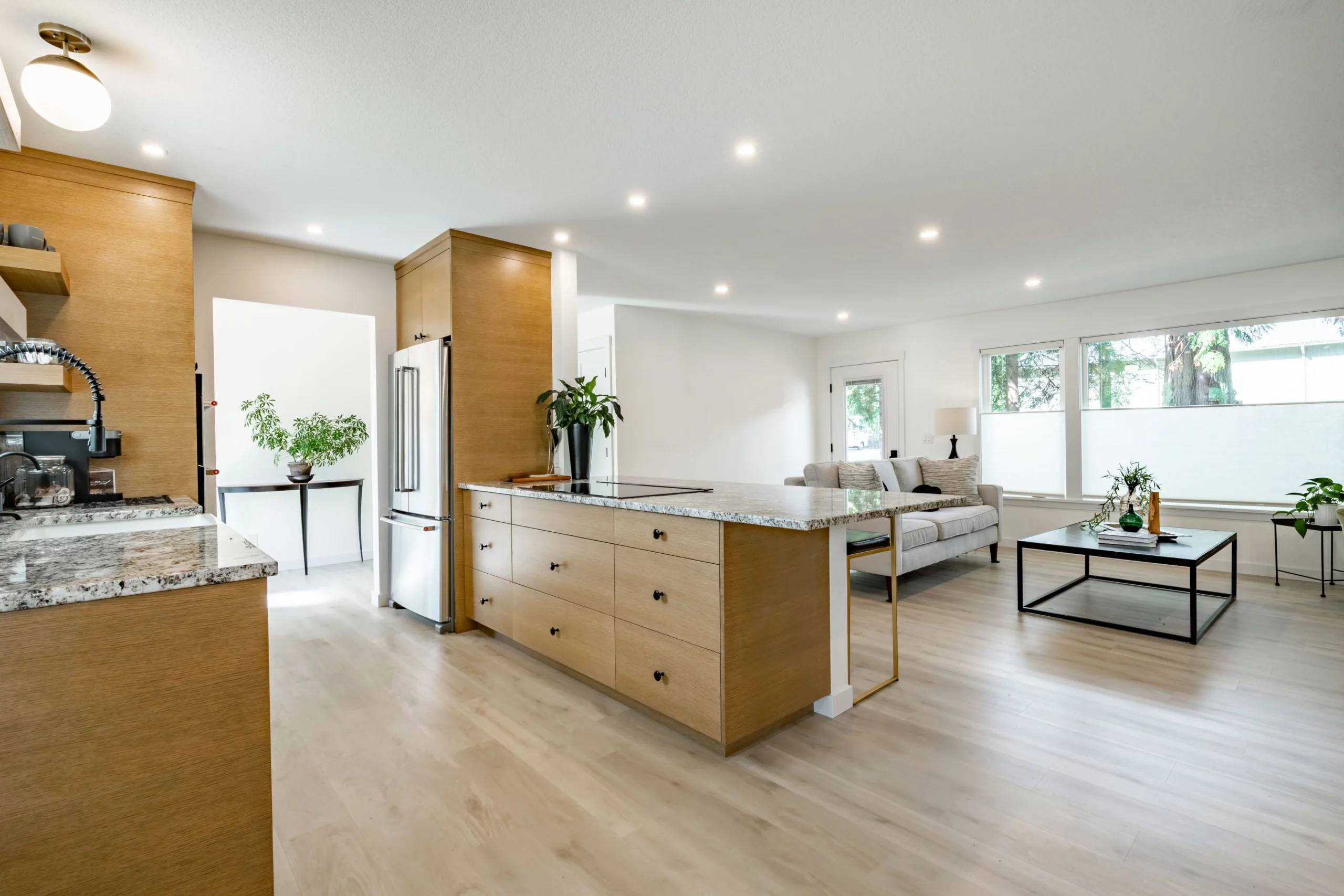

The kitchen is already the busiest room in the house, so why not make it work even harder? Instead of building a separate office, more homeowners are adding a smart, functional kitchen with desk area. Here’s how four real renovators did it and why they wouldn’t go back.
1. The Brooklyn Kitchen That Did It All
When one Brooklyn couple was refurbishing their single-wall kitchen, they had one vision in mind: make it work for both entertaining and everyday life. The result? A stunning L-shaped layout with a central island, and a dedicated desk area tucked right beside the fridge.
This kitchen with desk area setup cost roughly $40,000–$60,000 for the full renovation, but the desk nook itself added minimal cost since it was built into the existing cabinetry plan. Here’s what made it a win:
- Extra counter space that didn’t compete with meal prep
- A designated spot for recipe-reading and remote work
- Seamless integration with the overall kitchen aesthetic
2. A Desk Niche That Blends Right In
Laura and Randy didn’t have space for a separate office, but they found a clever workaround during their Upper East Side renovation. Their contractor carved out a kitchen desk niche just off the main cooking area, finished in matching white cabinetry.
The real magic? Bold, patterned wallpaper gave the desk corner its own personality without feeling disconnected from the rest of the kitchen.
Why This Approach Works So Well
A kitchen with desk area doesn’t have to feel like an afterthought. When the finishes match your cabinetry and a little wallpaper creates visual separation, you get a purposeful workspace that flows naturally into the room. It’s a small detail with a big impact.